Terrace Waterproofing Services: Before & After Transformations
Whether you’re a homeowner in a sunny villa or a business owner setting up a new warehouse in Dubai, flooring is one of your biggest capital outlays. It’s tempting to focus purely on the sticker price per square meter. But in the UAE’s unique climate, where intense heat meets high-performance AC, the “cheapest” option often becomes the most expensive regret within six months. If you want to manage the cost of flooring effectively, you have to stop thinking about the purchase and start thinking about the lifespan.
Here are the five blunders that will cost you and how to stay in the green.
1. Choosing Aesthetics Over the UAE Climate
It’s easy to fall in love with a dark, glossy hardwood in a showroom. But if that wood isn’t rated for high-heat environments or UV-stabilized, it won’t last.
In our region, humidity fluctuations and intense sun through floor-to-ceiling windows can be brutal. Many owners install standard indoor vinyl or wood that isn’t built for these conditions. This leads to “delamination,” where the layers literally pull apart. You end up paying for the floor twice: once to install it and again to rip it out when it bubbles and warps.
2. Skipping the Professional Subfloor Prep
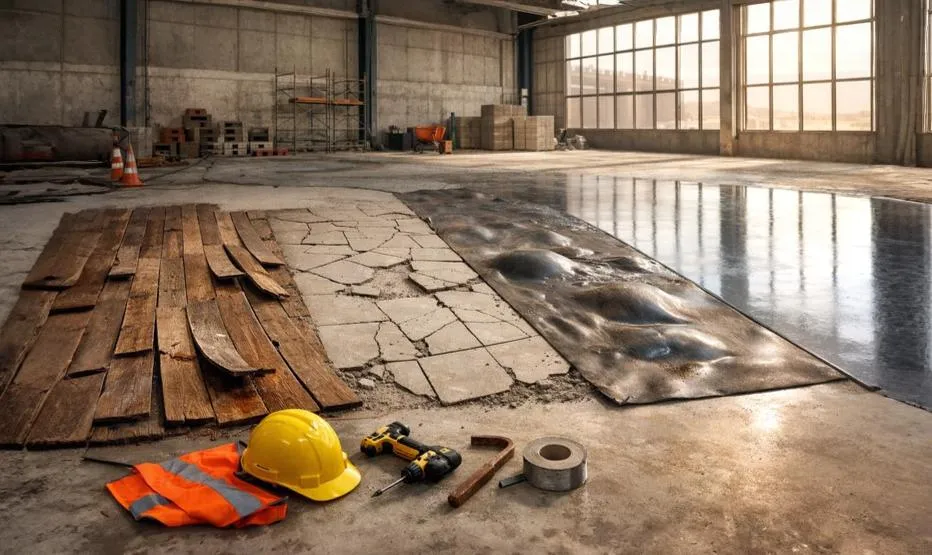
The most expensive flooring in the world will fail if it’s laid over a bad base. We often see DIY-ers or low-cost contractors skip laser leveling or moisture testing.
In the UAE, concrete slabs can often hold onto moisture. If you don’t use a professional damp-proof membrane (DPM), that moisture will rise. This is what causes your new floor to bubble, peel, or crack. A professional installation ensures the subfloor is clean, level, and bone-dry. Spending a bit more on prep now prevents a total floor failure later.
3. Treating "Industrial" as "Residential" (and Vice Versa)
Trying to save money by installing a “one-size-fits-all” surface is a recipe for disaster. A floor designed for a yoga studio will be shredded by a weightlifting zone or a garage in weeks.
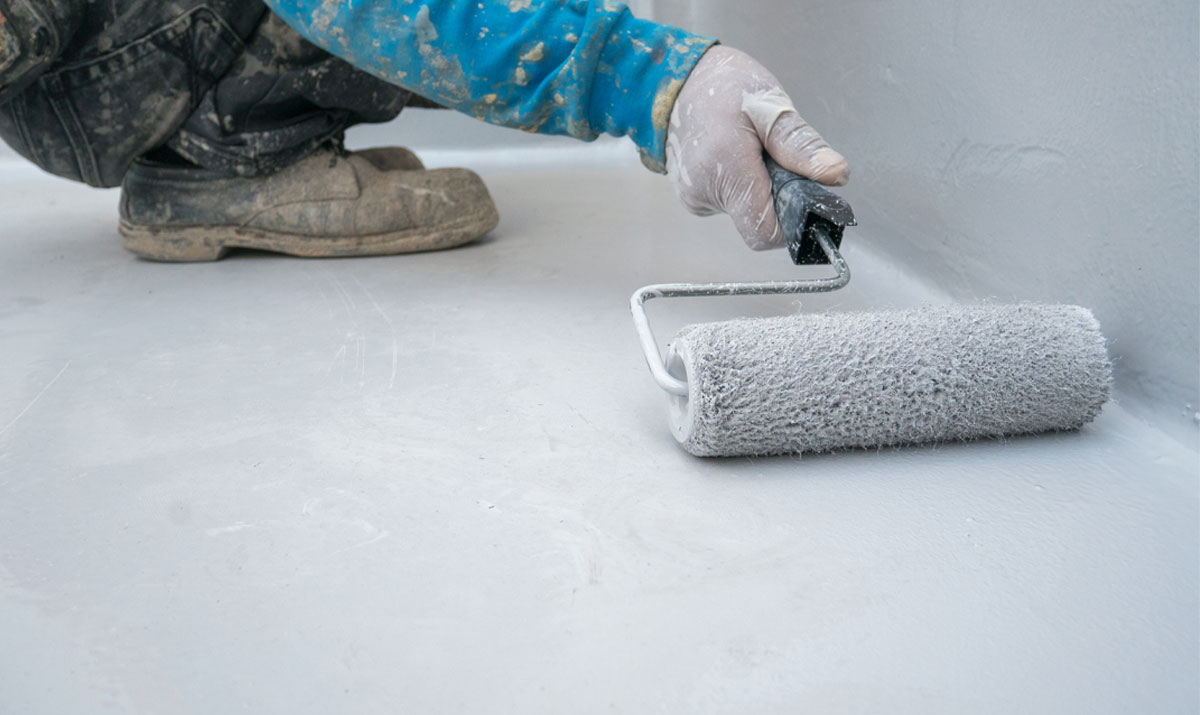
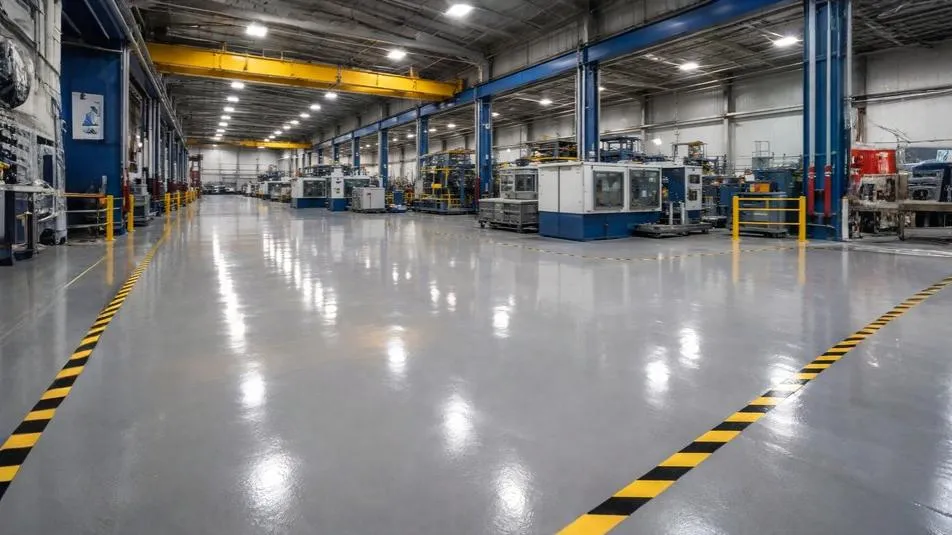
For high-traffic or high-impact areas, epoxy flooring is often the smartest financial move. Unlike tiles that can crack under pressure or wood that scratches, epoxy creates a seamless, non-porous shield. It’s significantly cheaper to maintain over a ten-year period because it doesn’t require specialized chemicals or frequent repairs.
4. Ignoring the Maintenance "Tax"
A floor that looks great today can become a hygienic nightmare tomorrow if it’s a pain to clean. Porous floors trap sweat, dirt, and bacteria.
If you choose a material that requires expensive waxes, buffing, or specific pH-neutral cleaners, you are adding a monthly “tax” to your flooring. Modern facilities are moving toward seamless surfaces because they are easier to sanitize and don’t require the heavy labour costs associated with grouted tiles or polished stone.
5. Buying Based on Upfront Price Alone
Budget is always a concern, but the lowest quote is rarely the best value. Low-cost options often come with hidden drawbacks: poor durability, no UV protection, and zero warranty.
Think long-term. High-quality flooring might cost more on day one, but if it lasts 15 years instead of 3, your actual annual cost is much lower. In the UAE property market, quality flooring adds real resale value. Cheap, peeling laminate does the opposite.
Final Thoughts on Cost of Flooring
The cost of flooring is about more than just the square footage, though. It’s about the preparation, the material’s resilience to heat, and the ease of keeping it clean. If you avoid these five common pitfalls, you protect your budget and end up with a surface that stays pristine for years.
FAQ
Generally, yes. While the upfront cost of premium epoxy can be higher than basic ceramic, the lack of grout lines means it won’t crack or collect dirt. You save a fortune on professional cleaning and repair over the years.
You can, but you’ll probably regret it. Professionals ensure the subfloor is treated for moisture. Shifting tiles or bubbling resin is a major trip hazard and an eyesore—it’s worth paying for the peace of mind.
It depends on the weights. For general fitness, 6mm to 8mm is plenty. But if you’re dropping 100 kg+ barbells? Don’t settle for less than 20mm to 30mm if you want to protect your slab.
For outdoor spaces, you need an acrylic or EPDM system specifically engineered to handle UV rays and sand abrasion. Standard indoor materials will fade and crumble under the desert sun in a single season.