Epoxy vs Polyurethane Flooring: Which Fits Your Space?
Picture a hotel kitchen at 6 a.m. Hot water gets tipped near a drain, trolleys roll over the same strip of floor all morning, and cleaning chemicals go down before service even starts. That is the real test behind epoxy vs polyurethane flooring. Both systems protect floors in demanding spaces, but they behave differently once heat, impact, and moisture pile up. Here is how each one works, where it tends to fit, and what to check before you pick.
How Epoxy Floors Are Built
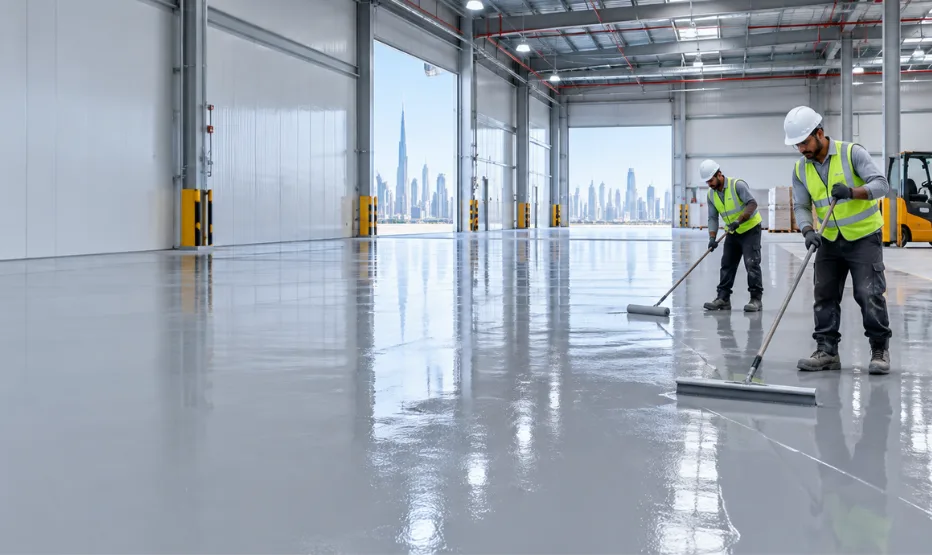
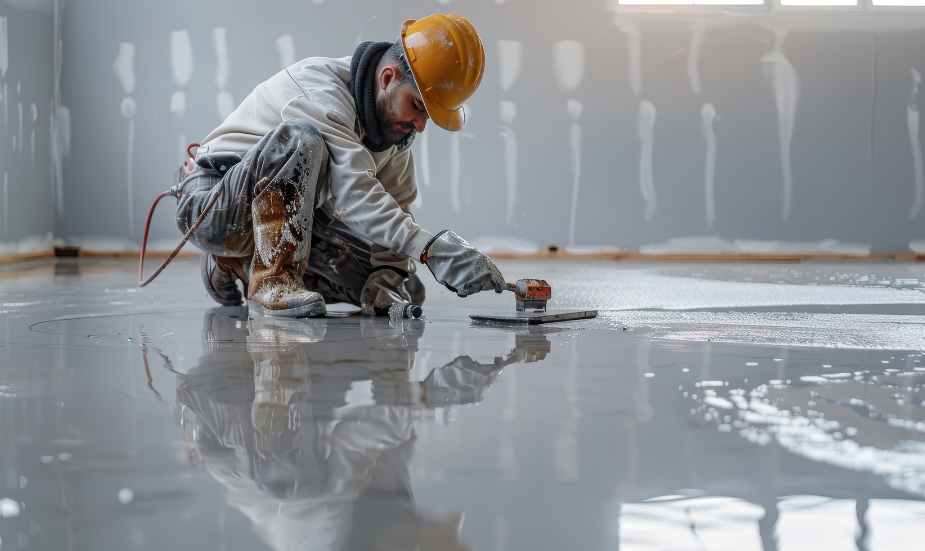
Epoxy flooring is made by applying multiple layers of epoxy resin onto a prepared surface. What you get is a smooth, seamless finish that holds up against chemicals, stains, and everyday wear. That is why you find it in car parks, warehouses, garages, laboratories, and some homes. Colors and finishes can be matched to a space, and metallic or clear epoxy is available when looks matter too.
Because the surface is seamless, it is easy to clean and maintain. Epoxy can also be cost-effective against tile, since application is seamless, installation is quick, and upkeep is low. Actual savings depend on the tile type and the size of the area.
Where Polyurethane Earns Its Place
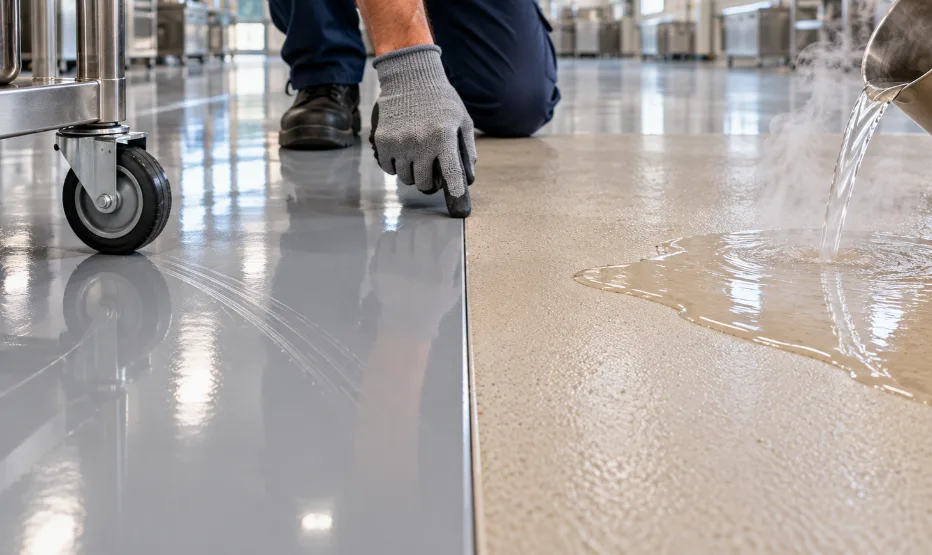
Polyurethane flooring, often laid as a PU screed in heavy-duty work, leans on flexibility. A 5 mm heavy-duty PU screed is made for severe environments, and its toughness and elasticity suit areas hit by thermal shock, heavy equipment movement, and frequent hot-water washdowns.
Thermal shock is just a rapid temperature swing. Think of hot water hitting a floor that was cool a minute earlier. PU screed is the system known for coping with that, thanks to its flexibility.
Epoxy Screed vs PU Screed at a Glance
The two screed types get compared constantly for commercial kitchens, so here is the short version.
| Factor | Epoxy screed | PU screed |
|---|---|---|
| Known for | High strength, chemical resistance | Flexibility, thermal shock resistance |
| Suits | High-traffic areas | Extreme temperature changes |
| Heavy-duty build | 5 mm epoxy screed | 5 mm PU screed |
Neither one is better in general. Each answers a different problem.
Epoxy vs Polyurethane Flooring in Hotel Kitchens
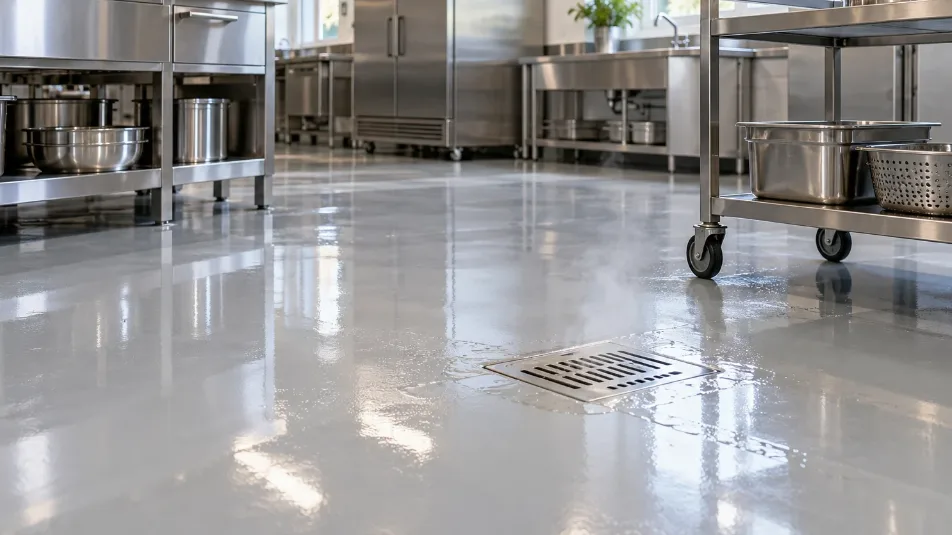
Commercial kitchens stack up stress that most floors never see. Foot traffic is constant, and heat, chemicals, and impact all show up in one room. Epoxy heavy-duty screed is used where traffic is heavy and resistance to heat, chemicals, and impact is needed. PU screed fits where hot-water washdowns and temperature swings are routine, and it is easy to maintain. The kitchen’s layout should drive the choice.
Hygiene is the other half. A floor that cleans easily helps food prep areas stay sanitary, and some coatings are sold as food-grade certified or microbial-resistant. Treat those labels as claims to verify. Ask for the certificate, the test basis, and the data sheet. Local food safety authorities set their own requirements, so check before specifying anything.
Limits Worth Knowing First
Epoxy has trade-offs. It can yellow or chalk under sunlight, so UV exposure matters in bright areas. It can scratch in busy zones. Proper surface preparation decides whether the coating bonds, and professional installation is often needed. explains why that step comes first, and shows how performance is measured. Ask for the same limits in writing for any polyurethane system you consider, since every product has them.
A Practical Way to Choose
Start with the floor’s worst hour, not its average one. When weighing epoxy vs polyurethane flooring for your own site, note four things: how hot the water gets and how often, which chemicals touch the surface, what rolls or drops on it, and how much sun reaches it. Heavy equipment and washdowns point toward PU screed. Chemical exposure and heavy foot traffic point toward epoxy screed.
Installation time depends on the size of the area and the project requirements, so ask for a schedule that limits downtime. Then vet the contractor. Check licenses and certifications, confirm insurance and warranty terms, look at past work, and get a detailed estimate. Clear communication matters more than people expect.
Final Thoughts
Neither system wins on every count. Epoxy brings strength and chemical resistance, polyurethane brings flexibility and thermal shock tolerance, and the right pick follows from how your floor is actually used. Verify claims on paper, and treat this guide as a starting point for a talk with a qualified professional. Which part of your floor takes the harshest day: the heat, the traffic, or the chemicals? Floor 2 Terrace publishes educational flooring guides for property owners across the UAE.
FAQ
Think strength versus flexibility. Epoxy screed is known for high strength and chemical resistance in busy areas. PU screed copes better with sudden temperature swings. Which one fits depends on whether your floor faces more traffic and chemicals or more heat and washdowns.
Often, yes, especially where hot-water washdowns and thermal shock are routine. PU screed is tough, elastic, and easy to maintain. Epoxy heavy-duty screed also works in busy kitchens, so your layout and daily routine should guide the decision.
A few. Sunlight can make it yellow or chalky, busy areas may show scratches, and it needs careful surface preparation to bond properly. Professional installation is usually needed. None of that rules it out, but it shapes where you use it.
It depends on the area’s size and the project’s requirements. Ask your contractor for a written timeline up front, particularly for a working kitchen where downtime costs money, and compare it against what you can realistically schedule.