Your Flooring Installation Will Fail Without This First Step
Here is something contractors see all the time. A client spends good money on a premium epoxy coating. The installation looks clean on day one. Six months later, it is peeling at the edges, bubbling near a drain, and the whole job needs to come up. The product was not the problem. The surface underneath was. Subfloor preparation is the least glamorous part of any flooring installation. Nobody takes photos of a freshly ground concrete slab. But get it wrong, and it does not matter how good the coating is or how experienced the applicator is. The floor will fail. That is just physics.
| Sl No | Table of Contents |
| 1 | What the Surface Actually Needs Before Any Flooring Installation Begins |
| 2 | Final Thoughts |
| 3 | FAQ |
What the Surface Actually Needs Before Any Flooring Installation Begins
Concrete looks solid. Touch it and it feels indestructible. But from a flooring standpoint, raw concrete is full of variables that determine whether a coating sticks or peels. The surface has to be clean, structurally sound, dry enough, and rough enough at a microscopic level for any coating to grip.
That last point trips people up. Smooth, polished concrete feels premium underfoot, but for epoxy flooring or waterproofing membranes, it is a nightmare. Coatings need something to mechanically key into. A surface that is too smooth will bond poorly no matter how well you mix the epoxy or how carefully you apply it. Diamond grinding creates what is called a concrete surface profile, opening up the pores of the slab so the coating has real grip.
Moisture is the other major variable. Concrete slabs in the UAE, particularly ground-floor slabs and those exposed to variable temperatures, can push moisture vapor upward. That vapor gets trapped under the coating and eventually lifts it. Moisture testing using a relative humidity probe or calcium chloride method before any flooring work begins is not optional if you want a result that lasts.
The Contamination Problem Nobody Talks About
Old adhesive residue. Curing compounds left over from when the concrete was originally poured. Oil from machinery. Even footprints from workers during construction can leave oils from skin that interfere with adhesion.
None of that is visible to the naked eye most of the time. But a coating applied over contaminated concrete will tell you about it within weeks. It starts as a small section that looks slightly different, and then the delamination works outward from there.
Shot blasting or mechanical scarification removes contamination and creates the correct surface profile in one pass. It is not an extra step done by overcautious contractors. It is standard practice for any serious flooring installation on concrete.
Cracks and What They Tell You
Not all cracks behave the same. Some are dormant, meaning they formed during the initial cure of the concrete and have not moved since. Others are active, shifting slightly with thermal expansion, building settlement, or ground movement. Treating both the same way is a mistake.
Dormant cracks get filled with rigid polyurethane or epoxy filler. Active cracks need flexible sealant that moves with them, because a rigid fill over an active crack will just crack again. Miss this distinction and the crack reflects straight through your new coating, usually faster than you expected.
Floor 2 Terrace Protection LLC has been working in construction chemicals and protective coatings across Abu Dhabi and Dubai for over 22 years. Part of what that experience delivers is the ability to look at a crack in a slab and know which category it falls into before any product selection happens. That assessment shapes the entire approach to the flooring installation that follows.
Priming: The Step That Ties Everything Together
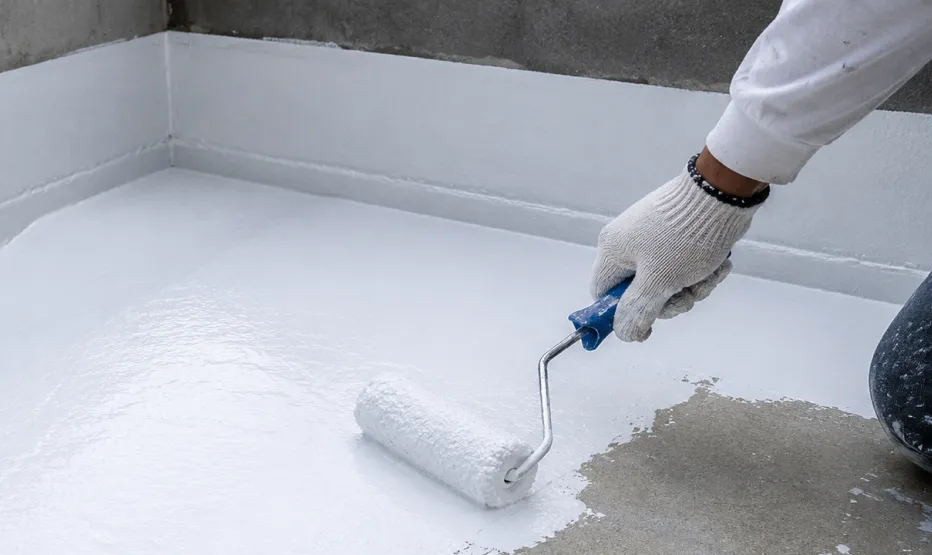
Once the surface is profiled, contamination-free, and cracks are treated, priming is what bridges the substrate and the coating. A penetrating primer seals the concrete against off-gassing, which is what happens when air trapped in the slab tries to escape through a freshly applied coating and creates pinholes or craters.
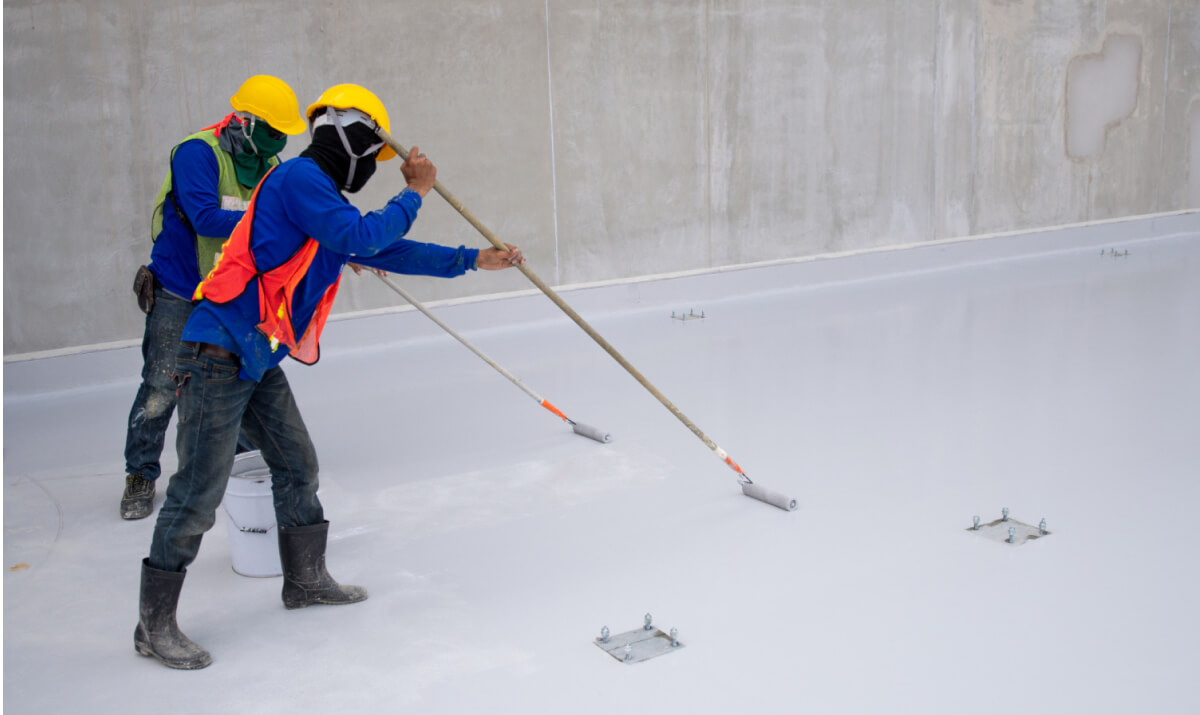
In wet environments, terraces, bathrooms, or anywhere close to a water source, a moisture-tolerant primer or vapor barrier layer may be specified. Skipping the primer to save time or cost is one of the most reliable ways to guarantee a repeat job within the year.
Why UAE Conditions Make Preparation Even More Critical
The temperature swings here are real. A black tiled terrace in Abu Dhabi can reach surface temperatures above 70 degrees Celsius in summer and drop significantly at night or in winter. Flooring systems expand and contract with those shifts. A coating installed on a properly prepared, profiled surface has the adhesive strength to accommodate that movement. One installed on a poorly prepped surface starts peeling at the stress points.
Humidity adds to this. Coastal areas around the UAE see moisture levels that affect curing times and slab moisture content. Projects that go ahead without testing, grinding, and priming in these conditions fail faster than they would anywhere else.
Final Thoughts
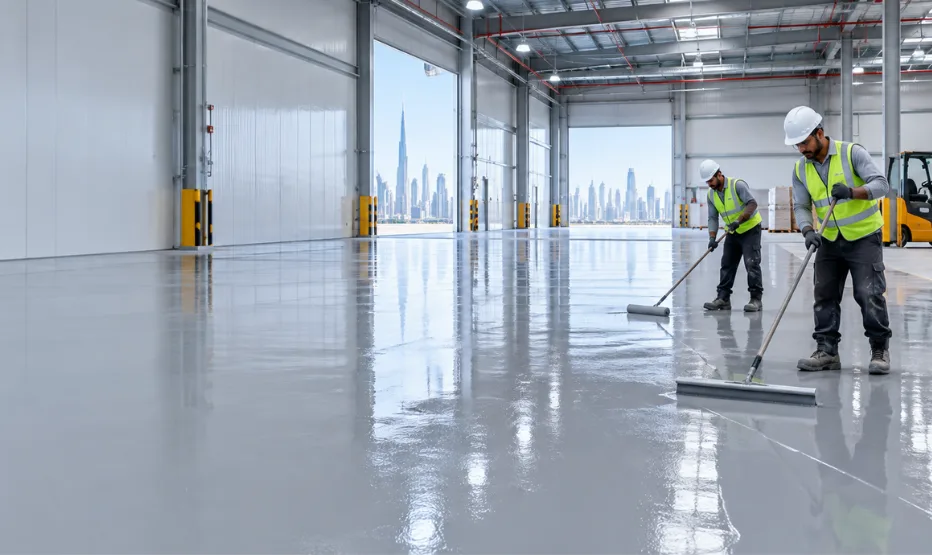
The floor you can see is built on work you cannot. Preparation takes time, it costs money, and it produces nothing that looks impressive in a progress photo. But it is the difference between a flooring installation that holds for a decade and one that needs replacing before the warranty discussion even comes up.
If you are planning a flooring project, the most useful question you can ask before anything else is: what does your preparation process actually involve, and how do you assess whether the substrate is ready?
FAQ
Yes, a little. Preparation is not optional for a lasting result. It is possible to apply epoxy without grinding and priming, and it might look fine for a few months. But the bond will not hold under real conditions. Any reputable flooring contractor will build preparation into the scope of work, not present it as an add-on.
You usually cannot tell by looking. The surface might seem dry but still be pushing moisture vapor. A proper in-situ relative humidity test or calcium chloride test gives you actual data. In the UAE, where temperature variation and coastal humidity are both factors, testing is worth doing before committing to any coating system.
Technically possible, but risky. You need to check that every single tile is firmly bonded to the substrate below it. Any hollow tile becomes a failure point under the new coating. Most experienced contractors will recommend taking tiles up and starting from the concrete slab, especially for commercial or high-traffic spaces.
Almost certainly a preparation issue rather than a product failure. The most common causes are insufficient surface profile, moisture in the slab that was not tested for, or contamination that was not removed before application. If the contractor used the right product but skipped preparation steps, the bond was always going to go.
For waterproofing it matters even more. A waterproofing membrane has to form a continuous, unbroken seal across the entire surface. Any weak bond, any missed contamination, any crack that was not treated correctly becomes a path for water. Preparation for waterproofing is not a box-ticking exercise; it is where the whole job succeeds or fails.