Waterproofing Lifespan UAE: How Long Does It Actually Last?
Rooftops in Abu Dhabi and Dubai age fast. The combination of 50-degree summers, UV exposure that never really lets up, and occasional flash rains hitting bone-dry concrete creates conditions that most waterproofing materials weren’t originally designed for. So when someone asks about waterproofing lifespan UAE, the honest answer isn’t a single number. It’s a range, and it depends heavily on what was used, where, and how well the surface was prepared before the first coat went down.
How Does Thermal Movement Affect Waterproofing Lifespan UAE?
Concrete expands in heat. It contracts at night. Do that for a few thousand cycles across a decade, and even well-bonded membranes begin to show hairline stress. That’s not a product failure in the classic sense. It’s physics. What matters is whether the waterproofing system was chosen with this thermal movement in mind.
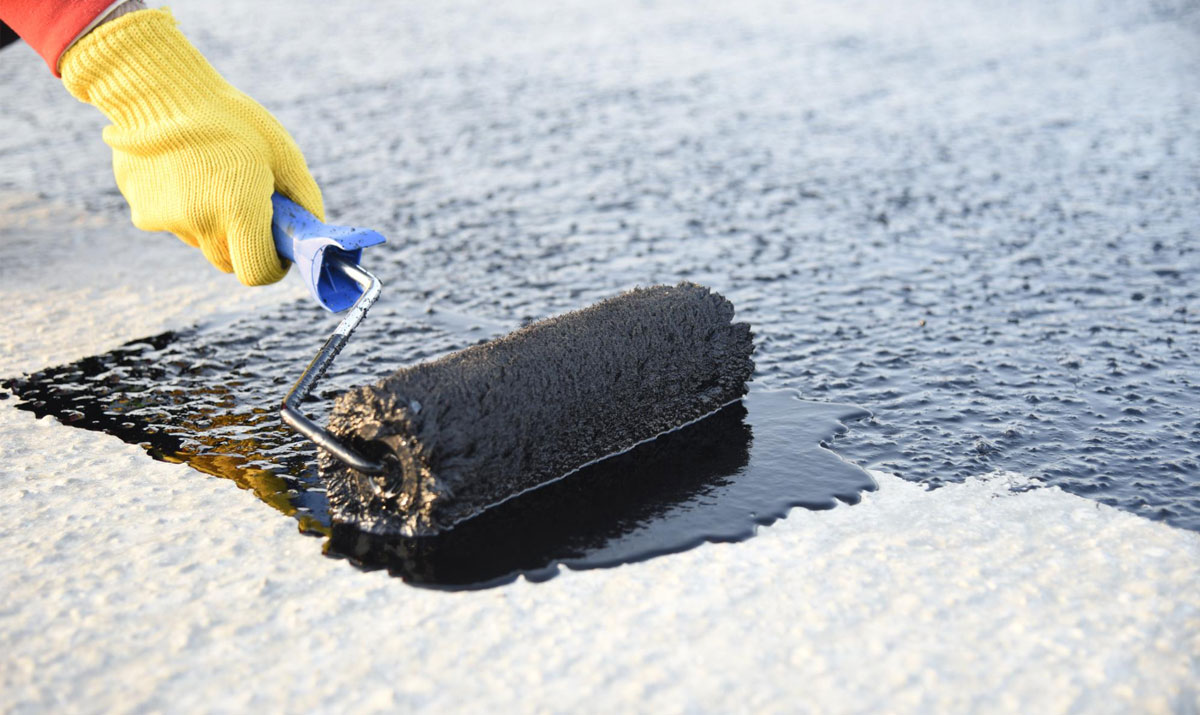
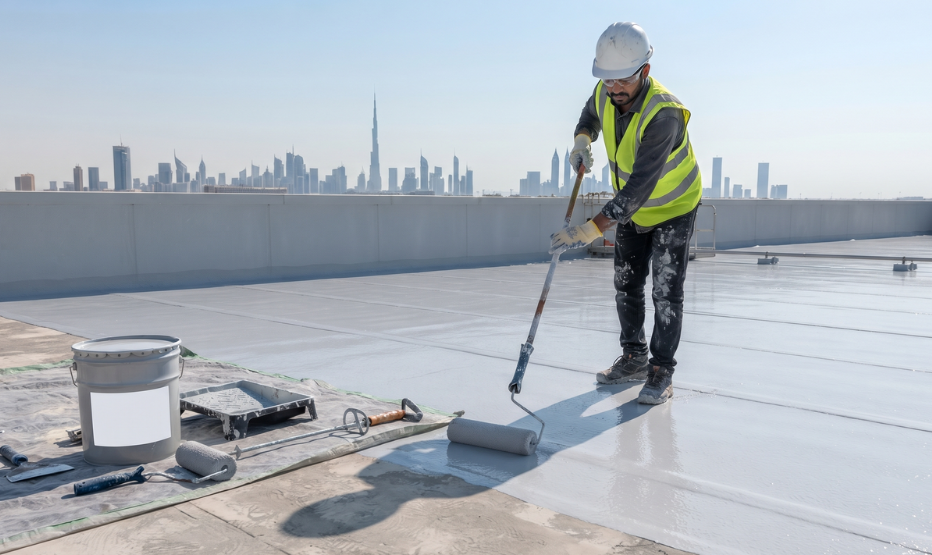
Standard bituminous coatings, applied correctly on a clean, primed surface, typically hold up for five to eight years under UAE conditions. Polymer-modified versions can stretch that closer to ten. Polyurea coatings, which bond hard and cure fast, are increasingly used on commercial roofs precisely because they handle thermal expansion better than most alternatives. With proper application, polyurea systems have been recorded lasting twelve to fifteen years in high-UV environments.
Cementitious waterproofing, commonly used in wet areas like bathrooms, tanks, and swimming pools, has a different lifespan profile. It bonds directly to the substrate and doesn’t flex much, so it works well in areas that don’t move. Expect eight to twelve years before any reapplication becomes necessary, provided the surface underneath hasn’t cracked.
Roof Waterproofing Durability: What Shortens It
Application quality is probably the single biggest variable in roof waterproofing durability. A premium membrane applied to a poorly prepared surface will fail faster than a mid-range product applied correctly. Surface preparation means removing all debris, filling cracks, applying a compatible primer, and letting it cure before the membrane goes on. Skipping the primer alone is enough to cut the lifespan by a third.
UV radiation accelerates the breakdown of most polymers. That’s why heat-resistant coating matters as a top layer. Reflective finishes on roof membranes don’t just help with energy efficiency; they slow the photo-degradation of the membrane underneath. In the UAE, a roof membrane without a UV-protective top coat is a system under stress from day one.
Ponding water is another issue. Flat roofs in the Gulf often develop low points where water sits after rain. It’s not the rain itself that causes damage. It’s the standing water softening the membrane over weeks and months. Proper drainage design is as important as the waterproofing product itself.
Membrane Waterproofing UAE: Types and Realistic Timelines
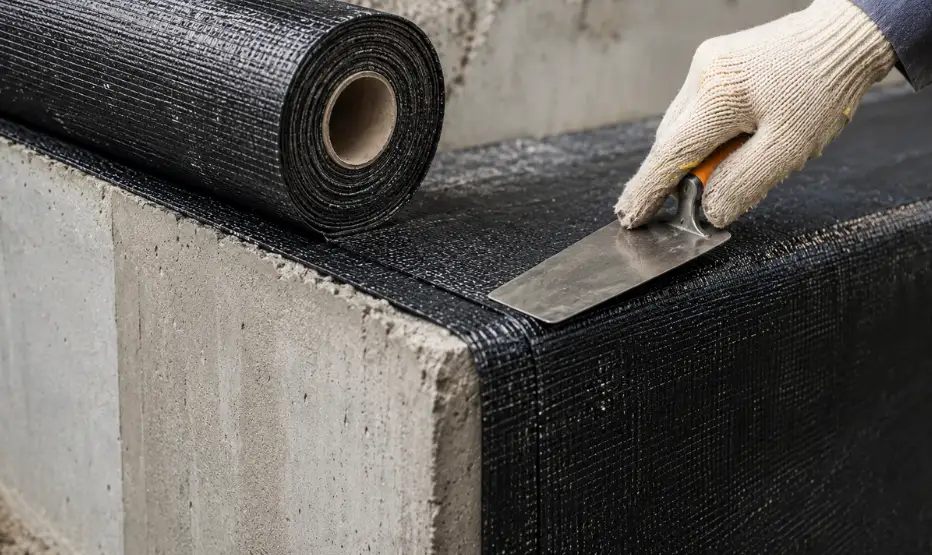
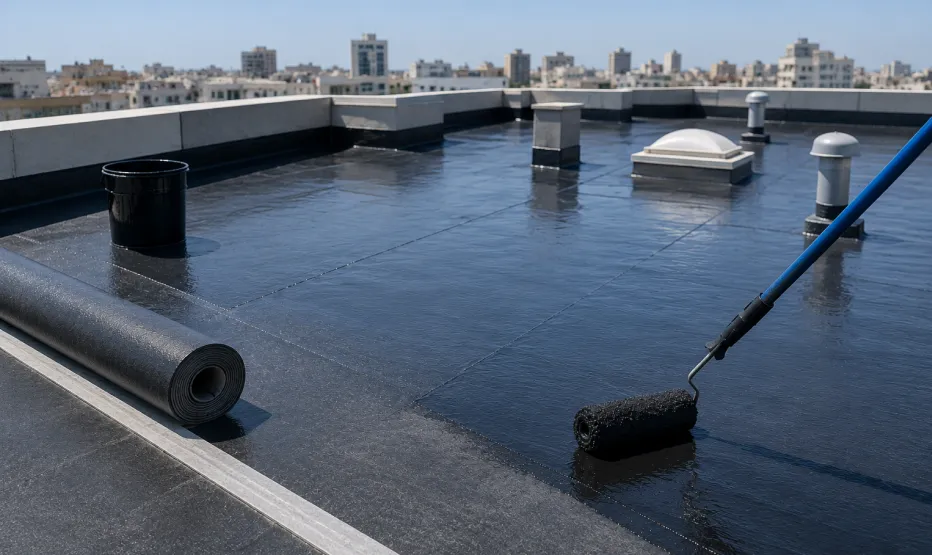
Sheet membranes, usually torch-applied bitumen rolls, are a staple across UAE construction sites. Lifespan sits around seven to twelve years depending on thickness and whether a protective screed was applied over the top.
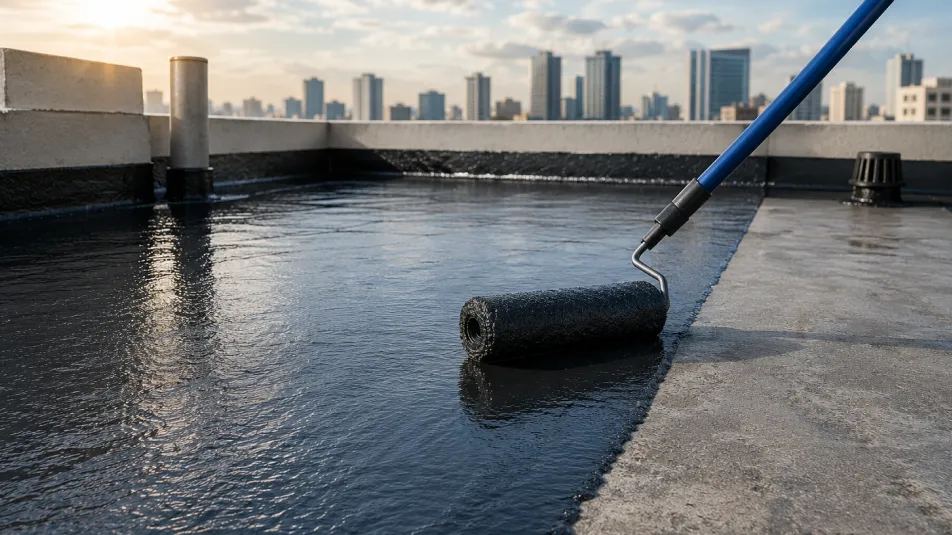
Liquid-applied membranes are gaining ground, particularly on complex rooftops with penetrations, upstands, and varied shapes that sheet membranes struggle to cover cleanly. Because liquid membranes cure as a single seamless layer, there are no joints to fail. This is an important detail. Joints and overlaps are often where older torch-applied systems start leaking first.
The combo roof system, which integrates waterproofing with thermal insulation in a single-layered application, is certified by the Dubai Central Laboratory and carries a manufacturer’s guarantee against leakage stretching to 25 years. That doesn’t mean zero maintenance for 25 years, but it sets a credible expectation for a multi-layer system with documented performance data.
When Should You Consider Reapplication?
A few signs are worth watching for. Visible bubbling or blistering in the membrane surface usually means moisture has gotten underneath and is trapped. White salt deposits on concrete, called efflorescence, are a signal that water is moving through the substrate. Paint peeling on interior ceilings near a flat roof or terrace is a later-stage sign that moisture has already worked its way through.
Most waterproofing contractors in the UAE recommend a professional inspection every three to five years rather than waiting for visible failure. Catching a small disbonded section early is a minor repair. Waiting until water reaches the structure is a much larger job.
Final Thoughts
The waterproofing lifespan UAE is not fixed. It shifts based on materials, application quality, drainage, and how much UV protection the top layer carries. A system chosen for Gulf conditions, installed by contractors who understand thermal expansion and surface preparation, will consistently outlast a cheaper fix applied without those considerations. The right question isn’t just how long waterproofing lasts. It’s whether the system you have was designed for where you actually live.
For a property assessment or to understand which waterproofing method suits your roof type, speaking with a contractor experienced in UAE conditions is the most reliable starting point.
FAQ
Most systems last between seven and fifteen years, depending on the material. Standard bituminous membranes average around seven to ten years. Higher-end systems like polyurea or combo roof setups with proper UV protection can push well past ten years under UAE conditions. Material choice and application quality are the two biggest factors.
Yes, significantly. Extreme heat causes concrete to expand and contract daily, which stresses any membrane over time. UV radiation also breaks down polymer-based coatings faster than in cooler climates. That’s why systems designed for Gulf conditions typically include a heat-resistant top coat to slow that degradation.
Sheet membranes, like torch-applied bitumen rolls, typically last seven to twelve years. Liquid-applied membranes can match or exceed that because they cure as a single seamless layer with no joints or overlaps. Joints are where most sheet systems start failing first, so the seamless nature of liquid membranes is a real practical advantage.
Absolutely. Blistering on the membrane surface, white salt deposits on concrete, and peeling interior paint near flat roofs are all signs of underlying moisture movement. By the time failure is visible on the outside, water may already be affecting the substrate beneath. Regular professional inspections every three to five years catch problems well before that stage.
The combo roof system, which layers waterproofing and thermal insulation together, carries a 25-year manufacturer’s guarantee against leakage and is certified by the Dubai Central Laboratory. It’s not a universal solution for every surface, but for flat commercial or residential roofs in the UAE, it represents one of the more documented long-term options currently available.