Concrete Carbonation: CO₂, Rebar, and Coatings
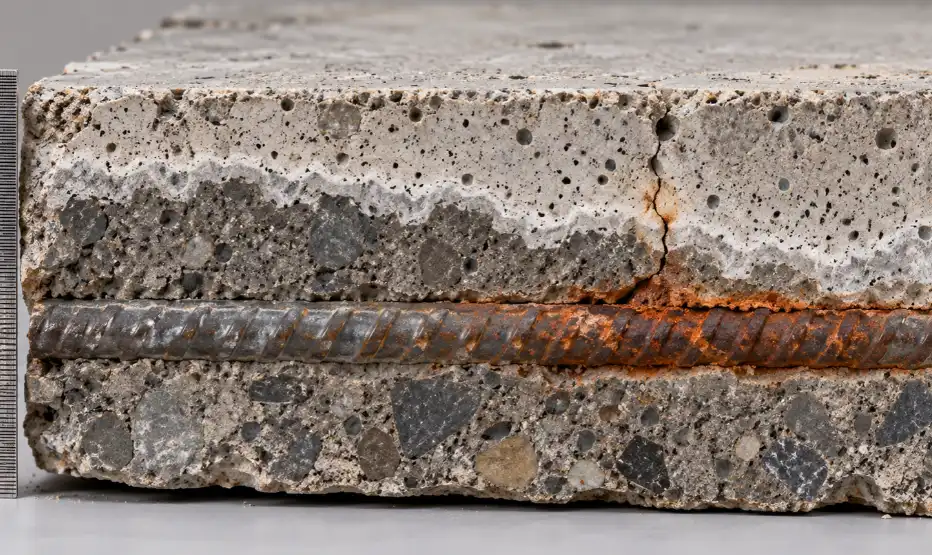
Break open an old concrete slab and the outer face can look perfectly sound. Concrete carbonation has often been working on it since the first year, creeping inward until it meets the steel. This guide explains the chemistry in plain language, shows how it leads to rebar corrosion, and clarifies what a coating can and cannot do.
Quick answer: Carbonation happens when carbon dioxide from the air reacts with alkaline compounds in cement. That lowers the alkalinity that protects reinforcing steel. Once the protection fades, rust can form, expand, and crack the concrete around it. A coating can slow gas entry, but it cannot repair damage that has already started.
What Concrete Carbonation Does Inside a Slab
Cement paste is naturally alkaline. That alkalinity forms a thin protective film around reinforcing bars, which is why steel buried in sound concrete stays free of rust.
Air carries carbon dioxide, and CO₂ in cement paste does not stay at the surface. It moves through tiny pores, dissolves in the moisture held there, and reacts with alkaline compounds. This carbonation reaction in concrete lowers alkalinity layer by layer, starting at the exposed face. Some people call the result CO₂ absorbing concrete, since the material takes in gas for as long as it is exposed. For reinforced concrete, that absorbed gas has a cost.
How the Front Reaches the Rebar
Engineers talk about a carbonation front, the advancing line behind which alkalinity has dropped. Ahead of the line, the concrete still protects the steel. Behind it, that protection is gone.
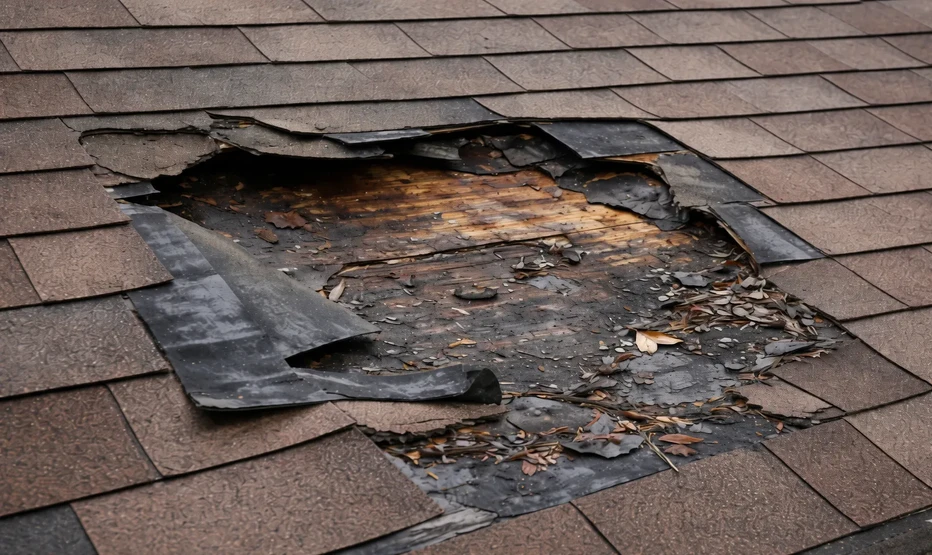
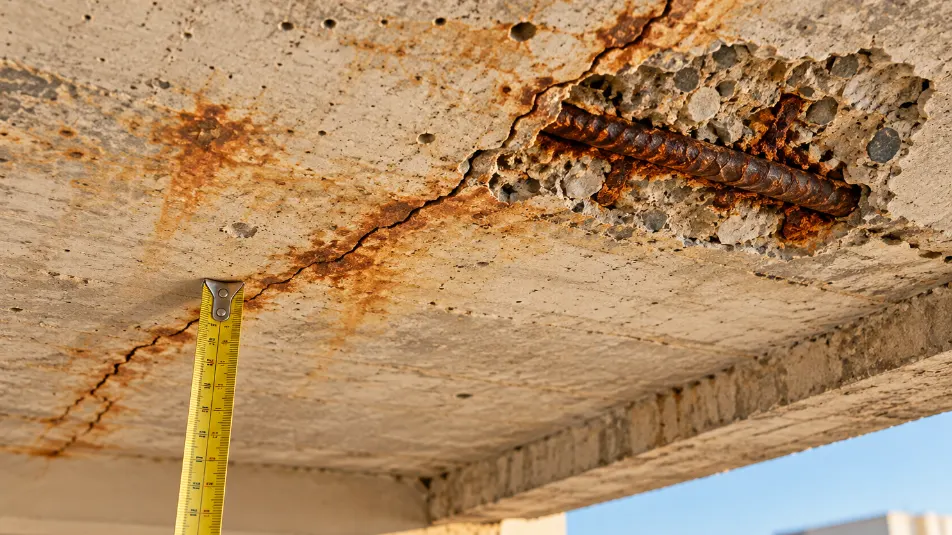
When the front reaches a bar, the thin film breaks down. If moisture and oxygen are also present, rust begins. Rust takes up more space than the steel it replaces, so it pushes outward against the cover concrete. Concrete handles pulling forces poorly, and it cracks. Those cracks let in more air and water, which speeds the cycle. In time, chunks of cover break away, a failure known as spalling.
Pace varies a great deal. Concrete quality, the thickness of cover over each bar, and how often the surface gets wet all shift the timeline, so two buildings of the same age can sit at very different stages.
Warning Signs Worth Reporting
What You Can See
Rust-colored stains, hairline cracks that follow the line of a buried bar, flaking patches, and small pinholes all deserve a closer look. None of them proves carbonation alone. Together they suggest something is forming beneath the surface. Photograph the area with a ruler beside it and note the date, so a later visit can show whether anything has changed.
What Needs an Engineer
Treat a crack in a column, beam, or load-bearing slab as a safety question rather than a cosmetic one. A qualified structural engineer should assess it before anyone patches it. This article offers general information and does not replace a site inspection.
Why Local Climate and Foundations Matter
Dubai’s climate can cause cracks and leaks over time, and any crack gives air and moisture a shortcut toward the steel. Foundations carry their own risk. Pile caps support a building’s foundation, and they need protection against corrosion and against mechanical damage from heat or cold extremes. A pile cap encapsulation repair system is built for exactly that job.
What an Anti-Carbonation Coating Can Do
What a Coating Cannot Do
A coating cannot reverse carbonation that has already reached the steel, and it cannot repair cracks sitting beneath it. Results also depend on the surface underneath. A coat laid over dirt, loose material, or open pinholes struggles to bond, which is why preparation comes first.
A Typical Order of Work
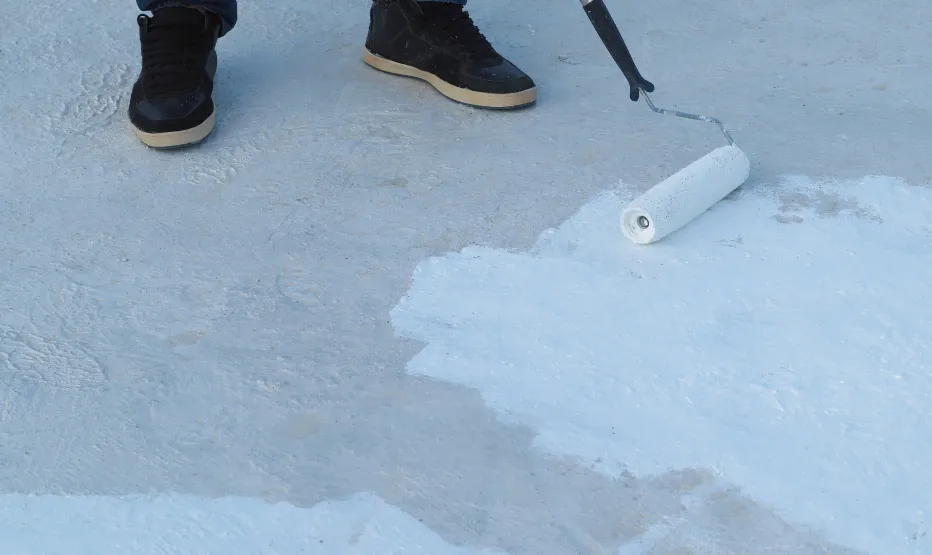
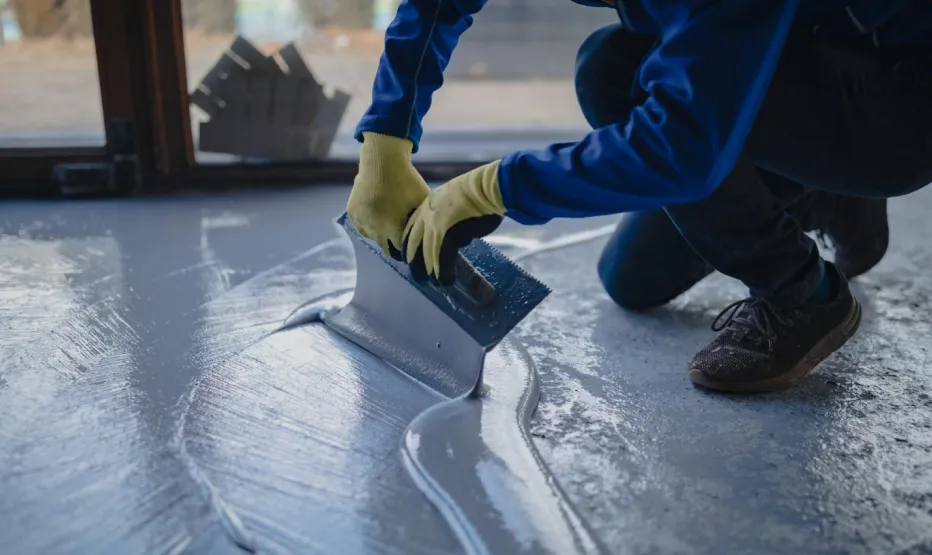
The sequence varies by structure, and an engineer sets the real one. A common outline runs like this. Inspect and record the damage. Rebuild concrete that has broken away. Fill pinholes with specialized fillers and sealants that bond to the concrete. Seal active cracks, and where water passes through them, use water leakage injection to close the path. Treat any exposed steel as the engineer directs. Apply the coating last.
Painting over a rusting bar hides the problem without solving it, so the order of work matters more than the product on the label.
Final Thoughts
Carbonation is slow, quiet, and well understood in principle, though nobody can say how fast it moves in a particular building. The practical habit is to inspect before the concrete gives you a reason to. This guide draws on repair practice described by Floor 2 Terrace for structures in Abu Dhabi. When was the oldest exposed concrete on your property last checked by a professional?
FAQ
Think of it as concrete slowly soaking up CO₂ from the air. The gas reacts with the alkaline material in cement and weakens its protective effect. The slab looks the same outside, but the steel inside gradually loses its shield.
Yes, once the reaction reaches the steel and moisture is around. Rust takes up more room than the bar did, pushing on the concrete and cracking it. That is why stains and hairline cracks on old slabs deserve a proper look.
Not really. A coating slows new CO₂ and moisture from getting in, which buys time. Cracks, pinholes, and rusting steel need repair first, and a structural engineer should decide how far that repair goes before anything is applied.
Call one straight away if the crack sits in a column, beam, or load-bearing slab, or if it keeps widening. Rust stains, flaking, or loose chunks are also good reasons to book an inspection, even when the crack looks small.