Fosroc Concrete Repair Meets Water Leakage Injection
Musaffah’s coastal humidity does something to concrete that dry inland sites rarely experience. Fosroc concrete repair materials were developed for exactly that kind of punishment: chloride-heavy air, wide swings between a blazing afternoon and a cooler night, and moisture that creeps through hairline cracks for months before anyone notices. At Floor 2 Terrace Protection, the same crew that installs a water leakage injection system also handles the concrete underneath it. A sealed joint means little if the structure holding it is already corroding.
Why Does a Waterproofing Company in Dubai Also Fix Concrete?
Sika Revi, the managing director at Floor 2 Terrace, spent more than two decades working across the construction chemicals industry with global manufacturers including Sika, Fosroc, and Schomburg before starting the company. That background matters here. A waterproofing company in Dubai that only applies membranes and coatings can miss the structural side of a leak entirely. Water rarely stays where it enters. It travels along rebar, pools at pile caps, and by the time it surfaces as a stain on a ceiling or a damp patch on a wall, the concrete around the leak path has often started to deteriorate too.
This is the gap concrete repair fills. Injection stops the water. Repair rebuilds what the water has already damaged or protects nearby concrete before it gets the chance to.
What Fosroc Concrete Repair Actually Involves
Floor 2 Terrace’s concrete repair work covers a fairly wide range: filling pinholes and minor surface cracks, encapsulating pile caps against corrosion, and applying rapid-setting, high-temperature repair systems for industrial clients such as steel plants, where materials need to hold up under conditions far beyond normal ambient heat. Fosroc concrete repair mortars and structural grouts sit in this same category of work, used to restore load-bearing capacity and rebuild cover over exposed steel reinforcement.
Repair specifications in this field generally follow the BS EN 1504 framework, the European standard covering products and systems for protecting and repairing concrete structures. It sets out how repairs should be assessed, specified, and evaluated, which matters for anyone comparing quotes between concrete repair companies in the UAE, since not every contractor applies the same rigour to surface preparation or material compatibility.
Where the Wet Injection System Picks Up
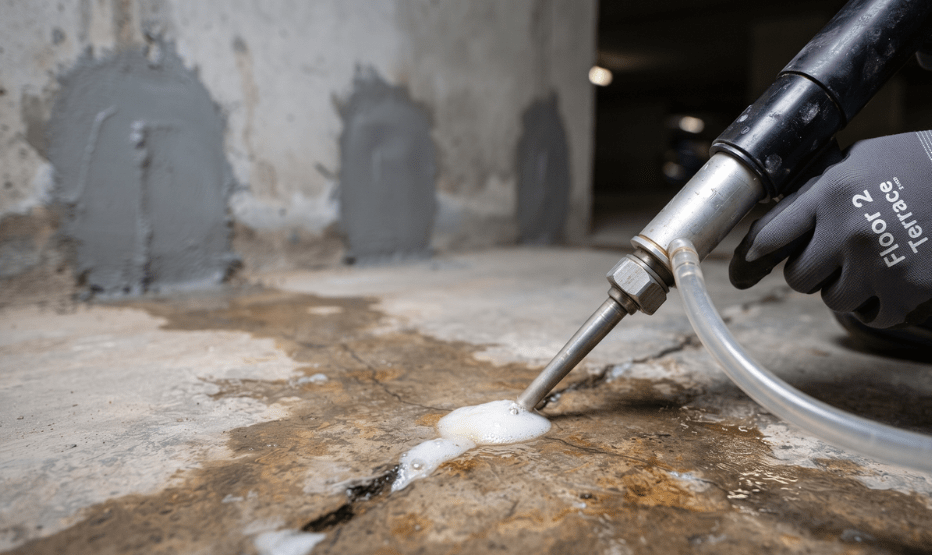
Once the concrete itself is sound, the water leakage injection system addresses the water path directly. The wet injection method targets basements, pipe penetration areas, cable sleeves, secant piles, expansion joints, and swimming pools, sealing the source rather than masking symptoms on the surface. For dry cracks that haven’t reached an active leak stage, a separate low-viscosity epoxy resin injection fills the fracture before it becomes one.
The re-injectable hose system is worth mentioning here too. Rather than a single sealed application, it leaves a flexible channel in place so sealing material can be reintroduced later if a joint shifts or a leak returns, which is common in structures that see seasonal expansion and contraction.
The Order That Actually Holds Up
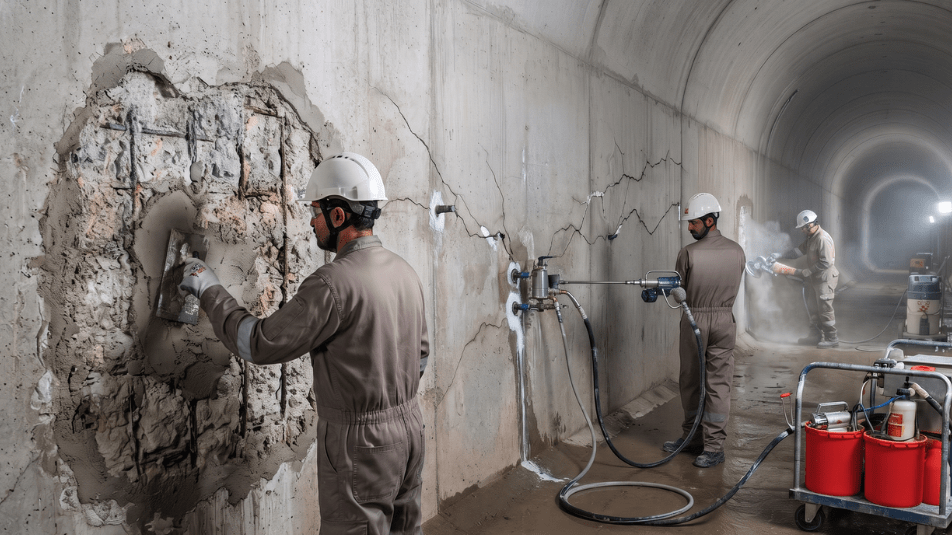
Sequence matters more than most property owners expect. Rebar exposed to chloride ingress corrodes and expands, and that expansion is what cracks concrete from the inside out in the first place. A review of chloride-induced corrosion research points to exactly this mechanism as one of the leading causes of structural deterioration in reinforced concrete. Sealing a crack without addressing the corrosion behind it buys time, not a fix. That’s why concrete repair, including pinhole filling and pile cap encapsulation, typically comes before or alongside injection rather than after.
Basement walls are a good example of the pattern. A crack lets water in, chlorides reach the rebar, corrosion begins, and the resulting pressure widens the crack further. Repairing the concrete first, then injecting the leak path, breaks that cycle instead of chasing it.
Final Thoughts
Water leakage and concrete damage tend to arrive together, even though they get treated as separate problems more often than not. Fosroc concrete repair materials and similar repair systems handle the structural side. Wet and dry injection methods handle the water path. Neither one does much good without the other when the damage has already reached the reinforcement.
If you’re looking at a leak alongside visible cracking, spalling, or staining that keeps returning, which part of the problem showed up first on your property?
FAQ
Yes, and they usually should be. Repair materials rebuild the concrete’s strength and cover over the rebar, while injection seals the actual water path. Skipping one and doing only the other tends to leave the underlying cause untouched, even if the leak stops for a while.
If the crack is dry and hasn’t reached an active leak, low-viscosity epoxy resin injection alone often works. Once you see active water, staining, or any sign of rebar exposure or rust bleed, repair work needs to happen too, not just sealing.
Not usually. Repair addresses damaged or corroded concrete, but it doesn’t seal an active water path the way injection does. Think of them as two steps in the same job rather than two separate options.
Chloride ingress and corrosion can start well before any visible cracking shows up. A surface can look intact while the rebar underneath has already begun corroding, which is why assessment matters more than a visual check alone.
It can be, especially in coastal or industrial sites where pile caps are exposed to moisture and temperature extremes. Encapsulation protects the foundation element itself, separate from any injection work happening elsewhere in the structure.