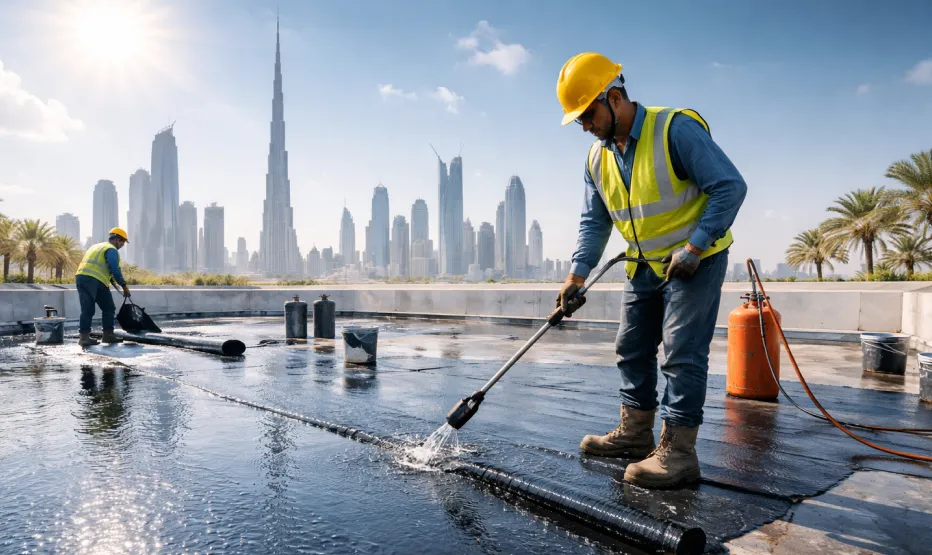
Top 5 Misconceptions About Waterproofing in the UAE Climate
Think waterproofing is just for rainy cities? Think again. In the UAE climate, prolonged sun exposure can be more damaging to roofs than rain. If you’ve been ignoring your terrace because “it never rains anyway,” you’re setting yourself up for a massive repair bill. Let’s get real about waterproofing in the UAE climate and why most homeowners get it wrong.
Is Waterproofing Necessary If It Doesn't Rain Often?
Yes, absolutely. While we don’t get daily downpours, the UAE climate features extreme thermal expansion and high humidity that wreaks havoc on concrete. When the sun beats down at 45°C, your building expands. At night, it contracts. This constant movement creates micro-cracks. When those rare, heavy rainstorms do hit, that water doesn’t just sit there; it finds those cracks and heads straight for your living room ceiling.
Myth 1: Heat Doesn't Affect Water Protection
This is the most dangerous mistake people make. Intense UV radiation eats through cheap sealants. A standard coating that works in Europe will bake and peel here within a single summer. Professional waterproofing in the UAE climate requires UV-resistant materials that stay flexible under the desert sun. Without heat-shielding properties, your protection is basically gone before the first cloud even appears.
Myth 2: Any General Contractor Can Do It
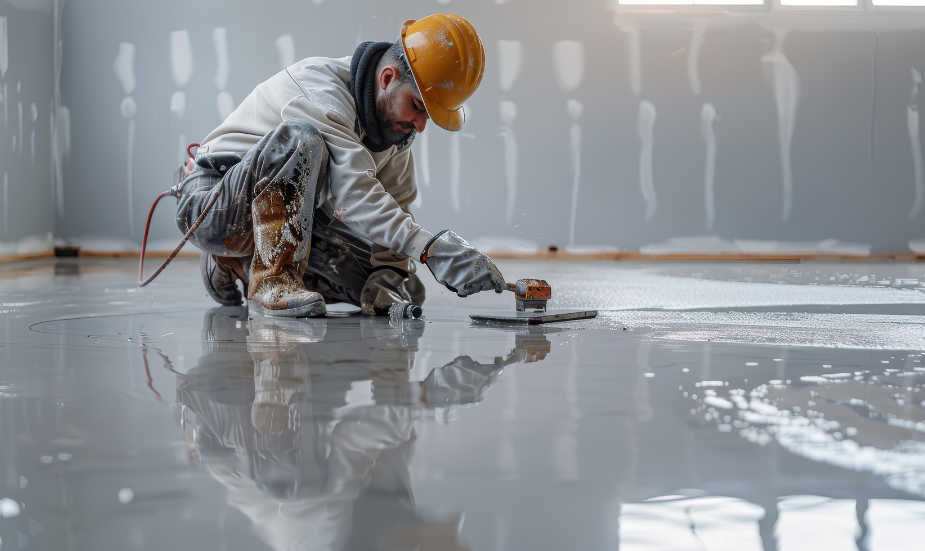
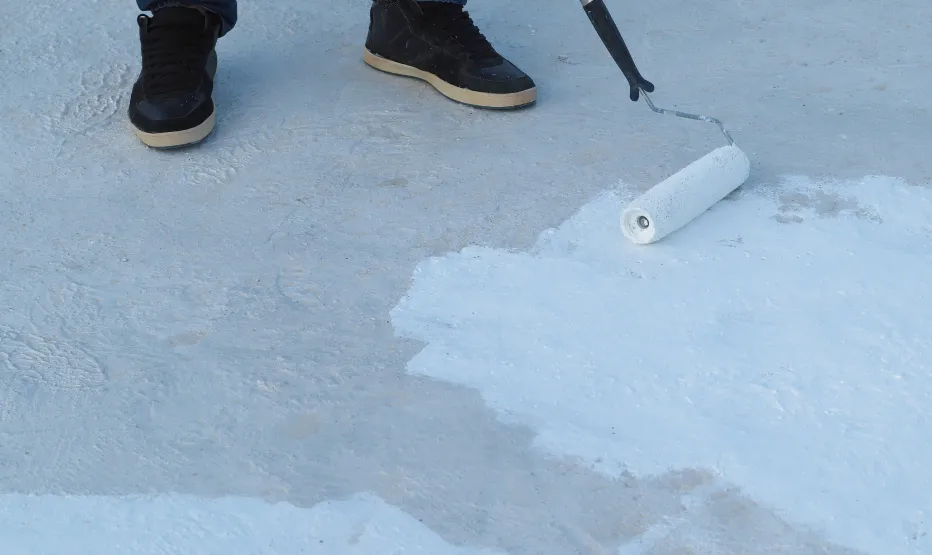
Waterproofing is a specialty, not a side job for a handyman. At Floor 2 Terrace, we see it all the time: a general builder slaps on some bitumen and calls it a day. Real protection involves surface preparation, primer application, and choosing the right liquid-applied membranes or specialized sheets. If the bond isn’t perfect, water will just travel underneath the layer, making the leak even harder to find later.
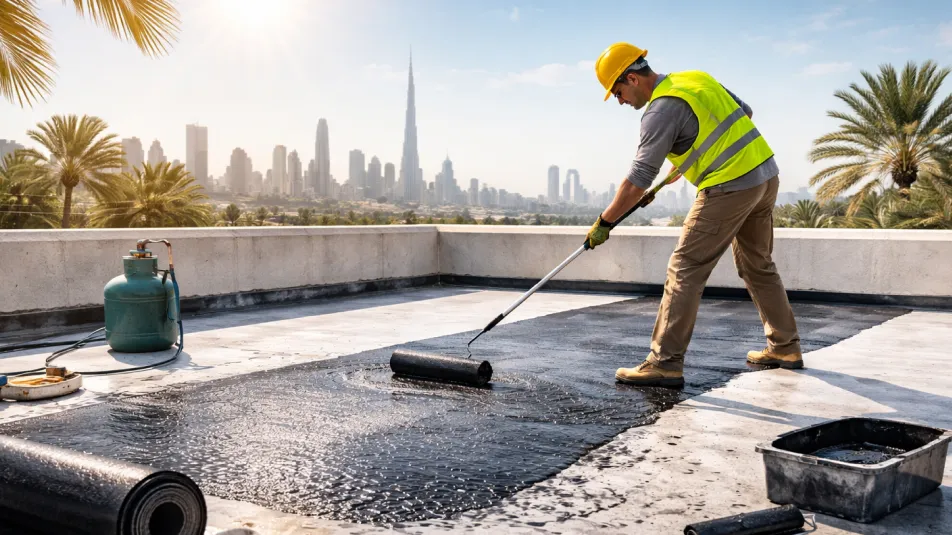
Myth 3: Indoor Leaks Only Come From the Roof
Not true. We often find that “roof leaks” are actually coming from bathroom wet areas or poorly sealed balcony joints. In the UAE, AC condensation is another silent killer. If your internal wet area protection is failing, moisture seeps into the floor slabs. This leads to rebar corrosion and “concrete cancer,” which is a nightmare to fix. You need a 360-degree approach that covers every potential entry point.
Myth 4: It's a "One and Done" Job
Nothing lasts forever in this heat. Even the best systems need a quick check-up every few years. Think of it like servicing your car. A small touch-up on a roof coating is cheap. Replacing a water-damaged interior and fixing structural steel is not. Regular inspections help catch those tiny sun-cracks before they turn into waterfalls during a February thunderstorm.
Myth 5: You Should Wait for a Leak to Fix It
Waiting for a drip is like waiting for your engine to seize before changing the oil. By the time you see a yellow stain on your ceiling, the water has already traveled through layers of insulation and masonry. Proactive sealing keeps your property value high and your lungs safe from the mold that thrives in damp, hidden spaces.
Final Thoughts on Waterproofing in the UAE Climate
Don’t let the dry desert air fool you. Your building is under constant stress from heat, salt, and humidity. Are you sure your roof is actually ready for the next seasonal shift? Reach out to the team at Floor 2 Terrace today for a professional assessment. It’s a lot cheaper than a new ceiling.
FAQ
It’s likely not to rain. It’s usually AC drainage issues or high humidity soaking into cracks that already existed. Or, you might have a pipe leak hidden in the slab. We can help you track down the source without tearing the whole place apart.
For a standard villa roof or terrace, you’re looking at 3 to 5 days. We need time to clean the surface, apply the layers, and let them cure properly. We don’t rush the drying—that’s how bubbles start.
Please don’t. Paint is decorative; it’s not a barrier. You’ll just hide the problem for a week while the water continues to rot your structure behind the scenes.
We usually recommend liquid-applied polyurethane or specialized bitu-stick membranes. They handle the “stretch” of the building much better than the old-school stuff.