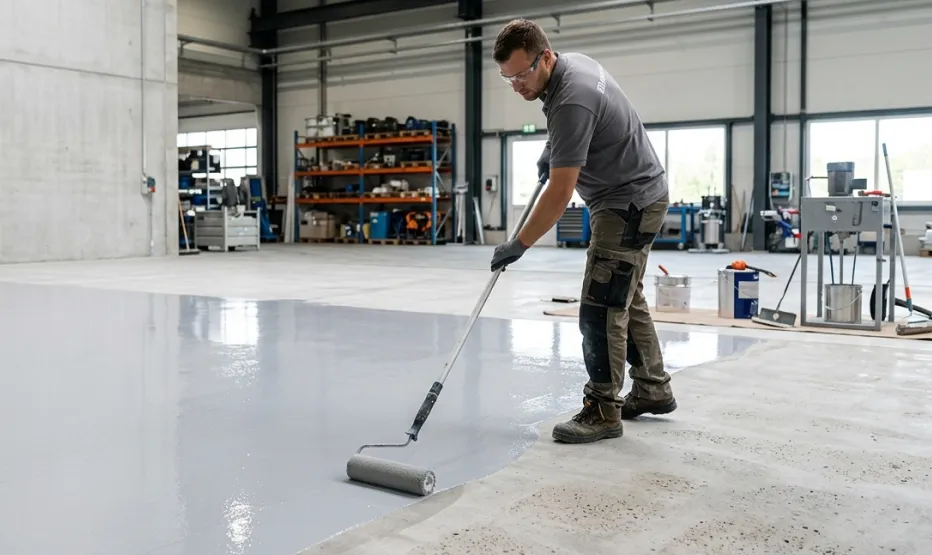
How Top Waterproofing Companies Use Epoxy for Floor Protection
If you manage a warehouse in Dubai or a retail showroom in Abu Dhabi, you know that floors take a beating. Between heavy forklift traffic and constant footfall, bare concrete eventually cracks, dusts, and fails. But the real enemy isn’t just weight, it’s moisture. This is why the best waterproofing companies have shifted their focus to high-performance epoxy coatings. It isn’t just about a shiny finish; it’s about building a structural shield that keeps your facility running without expensive downtime.
At Floor 2 Terrace, we’ve seen how the right industrial coating can turn a crumbling slab into a long-term asset. We don’t just “paint” floors; we engineer them to survive the harshest GCC environments.
Why Choose Epoxy Flooring for Industrial and Commercial Spaces?
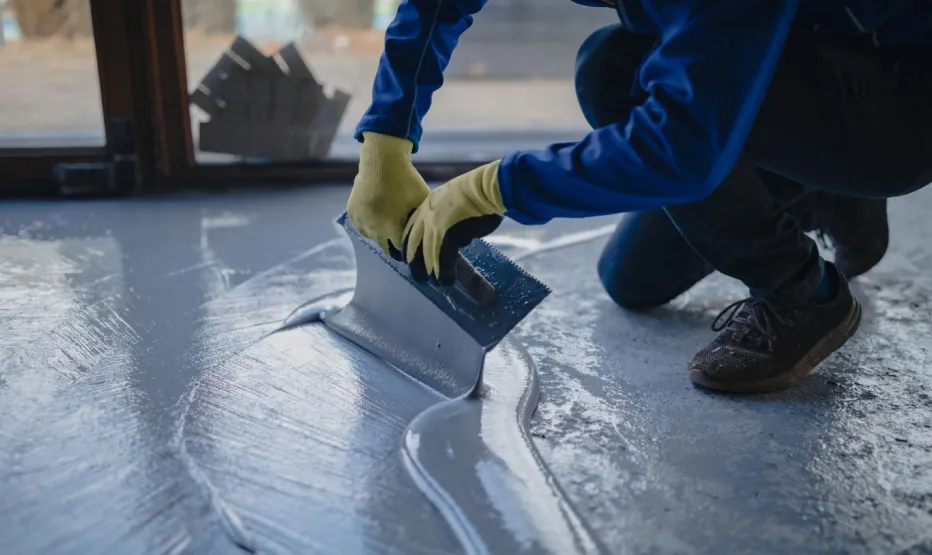
The short answer? Durability meets defense. Epoxy creates a non-porous, seamless barrier that makes it impossible for liquids to seep into the concrete. For business owners, this means your floor is protected from chemical spills, oil leaks, and rising dampness. When you hire an expert waterproofing contractor, you are investing in a system that bonds chemically to your substrate, creating a surface that is actually tougher than the concrete beneath it.
High-Impact Resistance for Warehouses
In an industrial setting, your floor needs to handle thousands of pounds without flinching. Epoxy mortar flooring is designed specifically for these heavy-duty environments. It withstands the mechanical stress of machinery while resisting abrasions that would peel standard floor paint in weeks.
Hygienic and Seamless Surfaces
Commercial kitchens and hospitals can’t afford grout lines where bacteria hide. Epoxy is completely joint-free. This makes it incredibly easy to sanitize, ensuring your space meets strict health and safety standards. Since the surface is non-absorbent, even the most stubborn chemical stains can be wiped away with basic cleaners.
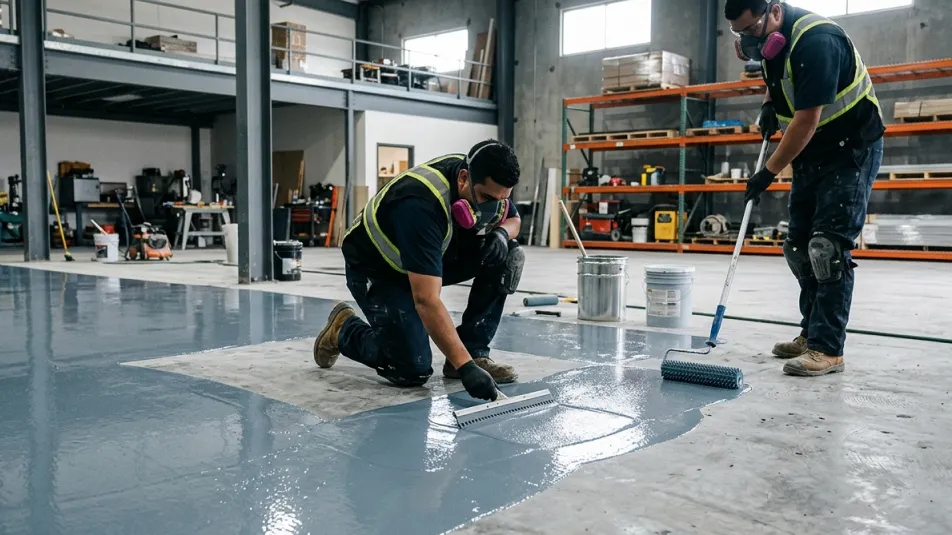
The Hidden Link Between Epoxy and Waterproofing
Many people think epoxy is just for looks. In reality, it’s a critical part of a complete waterproofing solution. Because epoxy is impermeable, it prevents water from above. But it also works as a vapor barrier, stopping ground moisture from migrating upward and causing “salt attack” or efflorescence.
Protecting Your Structure from the Ground Up
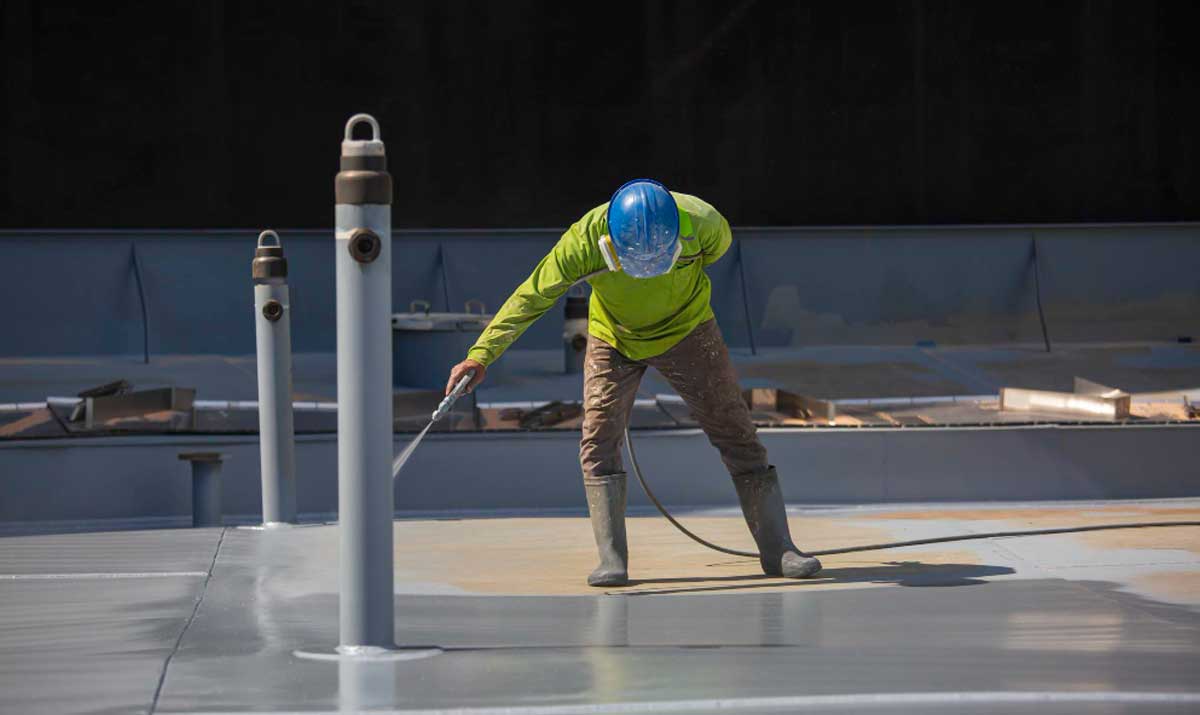
In the UAE’s humid climate, moisture management is everything. Most waterproofing companies will tell you that a failure in the floor often leads to structural issues in the walls. By sealing the floor with a high-build epoxy coating, you are cutting off the path for moisture-related damage.
- Self-Leveling Systems: Ideal for fixing undulating floors in showrooms.
- Anti-Static Coatings: Essential for electronics manufacturing and data centers.
- Slip-Resistant Textures: Keeps your team safe in wet or oily conditions.
How to Maintain Your Industrial Epoxy Floor
Maintaining a professional floor isn’t as hard as it sounds. You don’t need specialized polishing equipment, just a consistent routine.
- Daily Sweeping: Keep grit and sand off the surface. Think of sand as sandpaper; under the wheels of a forklift, it can dull the gloss over time.
- Occasional Mopping: Use a pH-neutral cleaner. Avoid acidic or soap-based cleaners that can leave a film or etch the surface.
- Address Spills Fast: While epoxy is chemical-resistant, it isn't bulletproof. Wipe up battery acid or harsh solvents quickly to maintain that "day one" look.
Final Thoughts on Waterproofing Companies
Your floor is the foundation of your business operations. Whether you’re trying to impress clients in a car showroom or protect a high-tech factory, epoxy floor coating provides the durability and moisture protection you need. Ready to stop worrying about cracks and leaks?
FAQ
Yes, it creates a 100% non-porous barrier. Unlike concrete, which is like a giant sponge, epoxy won’t let water, oil, or chemicals pass through. It’s a favorite tool for professional waterproofing companies in wet areas.
If it’s installed right, you’re looking at 10 to 20 years. The key is the surface prep. If you skip the grinding and cleaning phase, even the best resin will peel. Get the prep right, and it’s a long-term win.
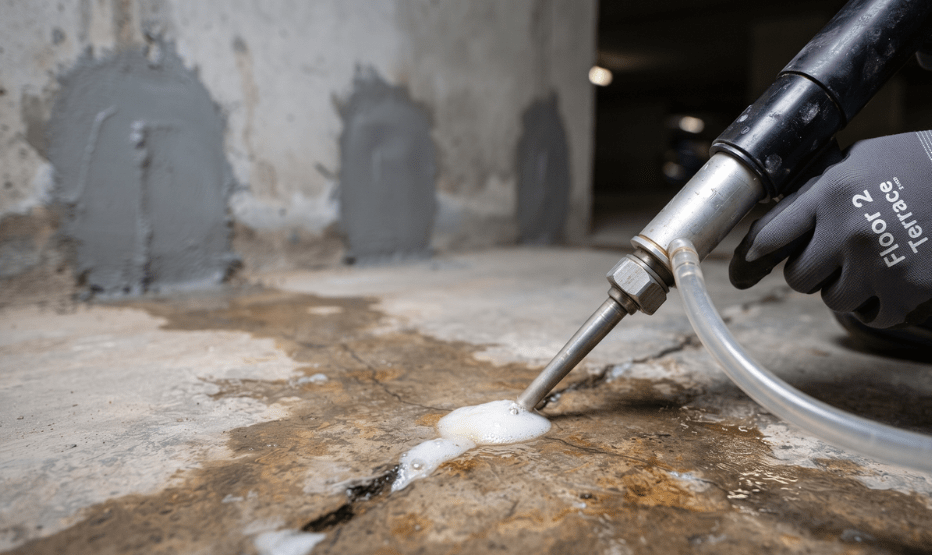
Absolutely. We use epoxy injection and heavy-duty screeds to fix the structural cracks first. Once the “foundation” is stable, the epoxy coating levels everything out for a smooth, brand-new look.
It can be, but we fix that by adding slip-resistant textures or “grit” during the application. It gives your team the traction they need without ruining the aesthetic.