Best Waterproofing Brand? One Product Won’t Cut It
You picked a product. You applied it. You called it done. Six months later, water is creeping under your terrace tiles again. This is the most common mistake property owners make when it comes to waterproofing floors and terraces. They treat it like painting a wall. One coat, one product, problem solved. But water doesn’t work that way, and neither does a surface that actually has to keep it out. Here is what actually works, and why the best waterproofing brand in the market will always tell you the same thing: layers matter more than labels.
Why a Single Waterproofing Product Always Falls Short
Ask any experienced waterproofing company in Dubai and they will say this without hesitation. Different surfaces carry different risks. A terrace exposed to direct sunlight, foot traffic, and UAE summer temperatures behaves nothing like a bathroom floor or a basement slab. Each one has its own movement, its own moisture load, and its own failure points.
A single product addresses one layer of that problem. It might seal the surface. But it leaves the substrate vulnerable, the joints exposed, and the drainage logic untouched.
Here is the breakdown of why this matters structurally.
- ➜
Concrete Moves: Even after curing, concrete expands and contracts with heat cycles. A rigid waterproofing membrane applied alone will crack over time, especially in outdoor terrace applications where surface temperatures can exceed 70 degrees Celsius in peak summer. - ➜
Joints and Edges Are Always the Weak Point: The field area of a floor rarely leaks first. It is almost always the perimeter, around pipes, at expansion joints, or where one surface meets another. A single brush-applied coating does not address these zones differently. - ➜
Drainage Design is Separate from Waterproofing Chemistry: If water pools on a terrace because the fall is incorrect, no membrane will hold indefinitely. Chemistry and civil design have to work together.
The Multi-Layered System: What It Actually Looks Like
This is where most guides go vague. Let’s be specific.
A proper floor and terrace waterproofing system is typically three to four layers working in sequence, not in isolation.
- ➜
Primer or Bonding Coat: This prepares the substrate and ensures adhesion. Skipping this is like painting without sanding. The top coat peels, separates, or bubbles. - ➜
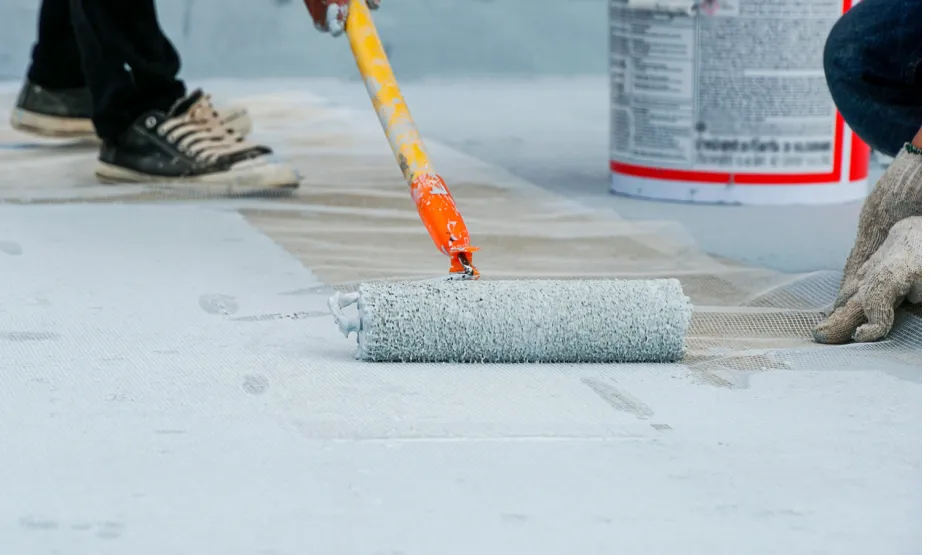
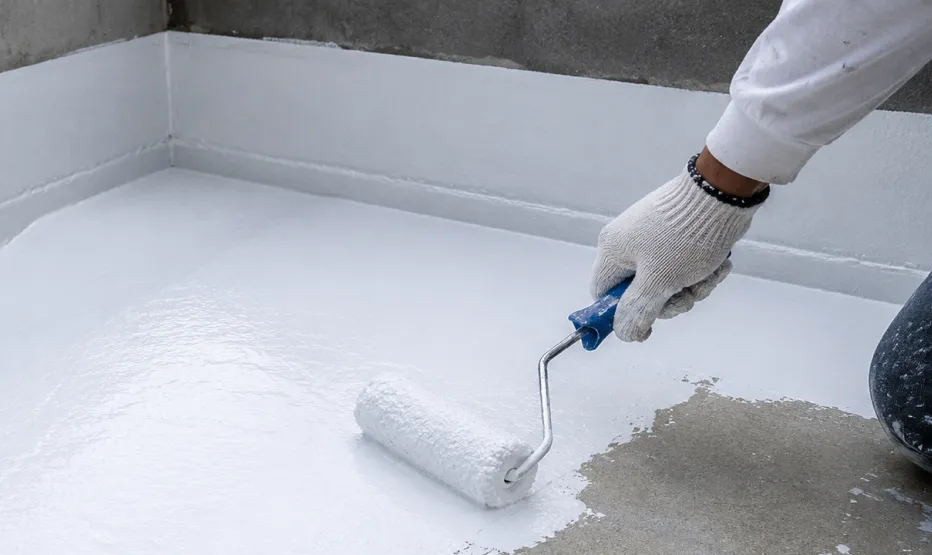
Primary Waterproofing Membrane:This is what most people think of as “the product.” It could be a cementitious coating, a polyurethane membrane, or a polyurea system depending on the surface and exposure level. - ➜
Protection or Wear Layer: Particularly important for terraces with foot traffic. The waterproofing membrane itself is often not designed to take direct abrasion. A screed, tile adhesive layer, or UV-stable topcoat protects the membrane beneath. - ➜
Joint Sealants and Detail Work: This is the step that determines whether the whole system holds. Expansion joints, pipe penetrations, and perimeter flashings need a flexible sealant that moves with the structure. This is separate from the field membrane and requires its own product.
Floor 2 Terrace uses exactly this kind of layered thinking across their waterproofing services, which span everything from balcony waterproofing and roof systems to wet areas and water tanks.
How to Choose the Right Products for Each Layer
The answer to this depends on three things: the surface type, the water exposure level, and whether the area sees thermal movement.
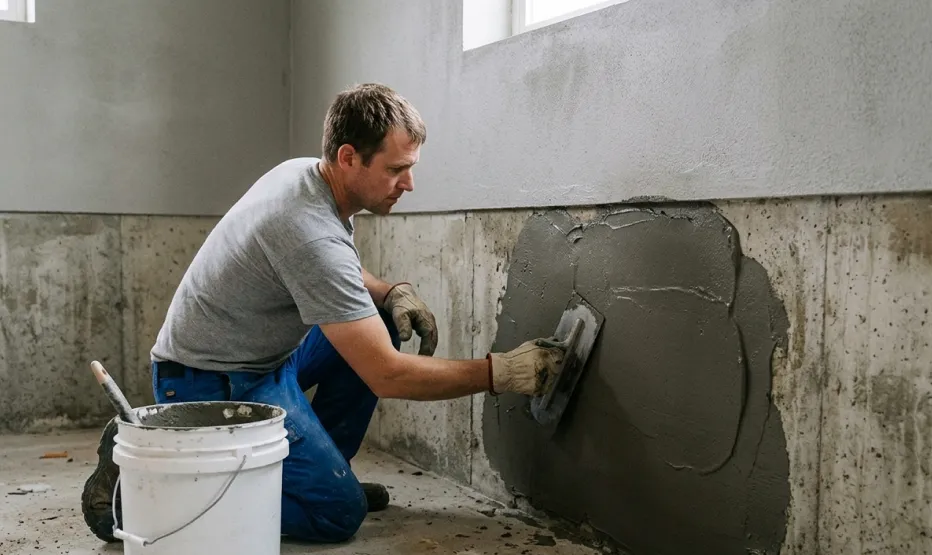
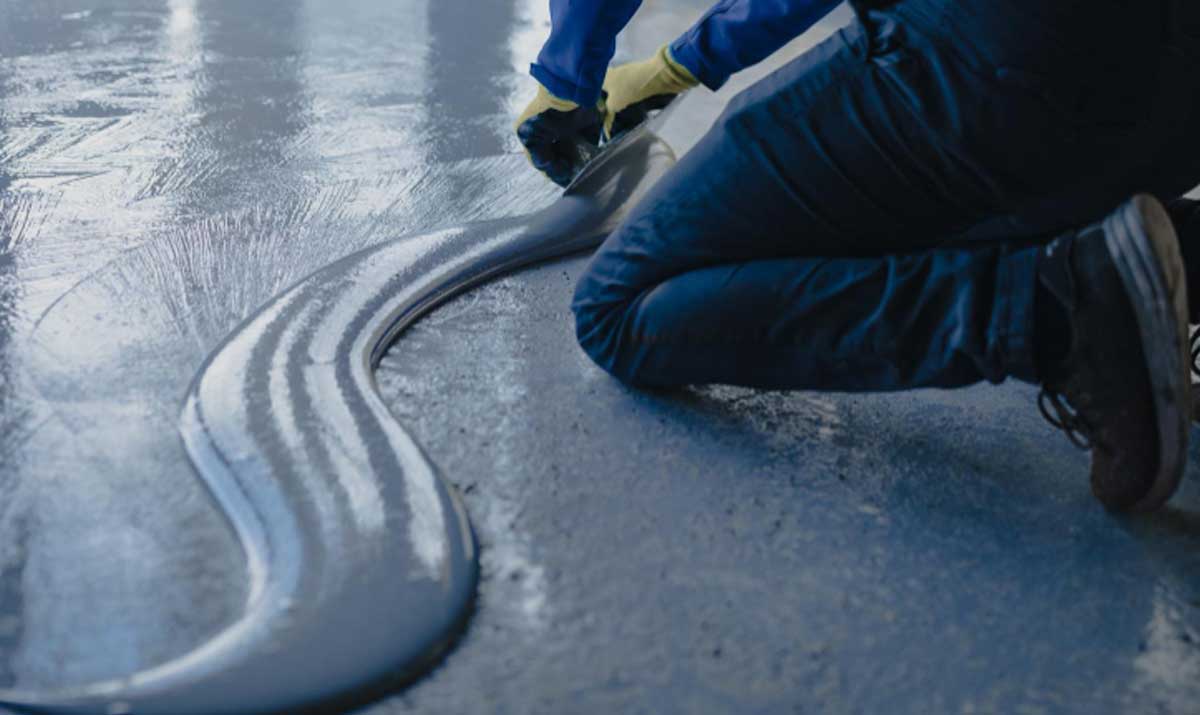
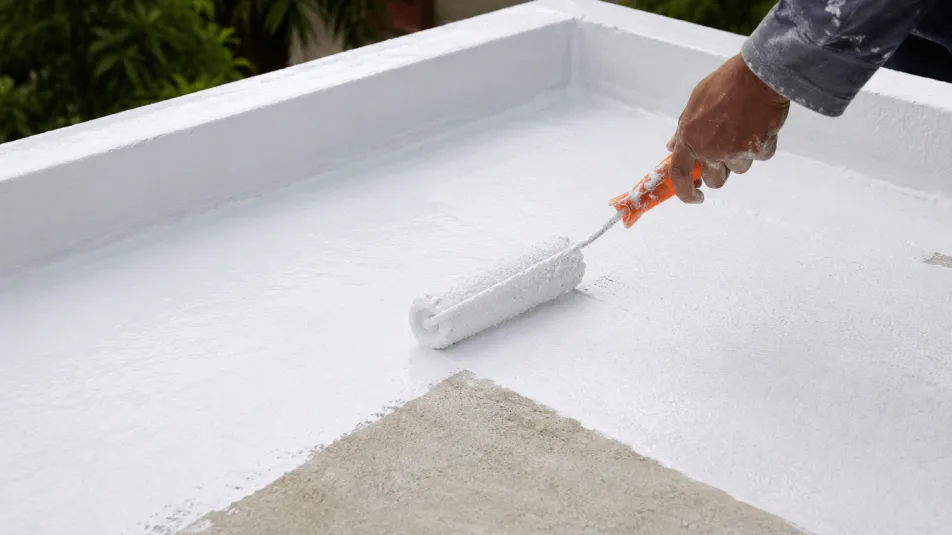
For rooftop terraces in the UAE, a polyurea system is often the strongest performer. It cures fast, handles extreme temperature swings, and bonds well to concrete. For wet areas like bathrooms and kitchens, a cementitious or epoxy-based waterproofing system is more practical and cost-effective to apply in confined spaces.
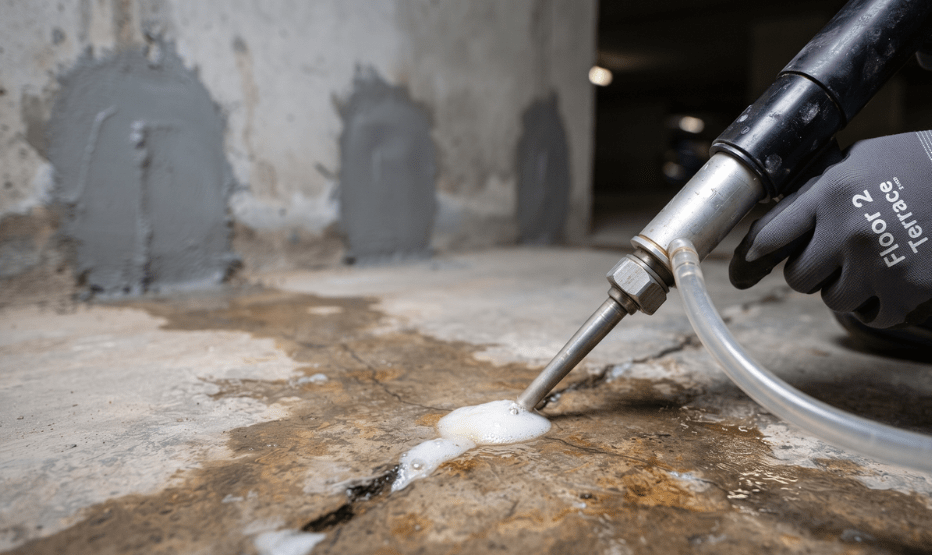
For basements and substructures where water pressure comes from below, the system is different entirely. You need a crystalline or hydrophilic system that works with the concrete rather than just sitting on top of it.
None of these decisions are one-size-fits-all. That is the core point.
Final Thoughts on Best Waterproofing Brand
Waterproofing is not a product decision. It is a systems decision. The best waterproofing brand in the world will not save a job where the layers, details, and drainage logic were not thought through together.
If your terrace or floor has failed before, it almost always comes down to one of three things: wrong product for the surface, missing joint treatment, or no protection layer over the membrane.
Get those right, and a properly waterproofed terrace in the UAE should perform for well over a decade without intervention.
FAQ
Rarely. A terrace faces UV, heat movement, and foot traffic all at once. One product handles one part of that. You need a primer, a membrane, and a protection layer at minimum, plus proper sealant at all joints and edges.
For most terraces and outdoor floors in Dubai, a polyurea or polyurethane membrane system works well because it handles high temperatures and stays flexible as the concrete moves with heat cycles. The specific product depends on your surface and drainage setup.
Nine times out of ten, it is the joints and edges, not the field area. The membrane applied to the flat surface holds, but the perimeter, drainage outlets, and wall junctions were not treated with a flexible detail sealant. Water finds those gaps.
At minimum three: a bonding primer, the main waterproofing membrane, and a wear or protection layer. For terraces with tiles, the tile bed itself acts partly as a protection layer, but the joints still need separate treatment.
Yes. Indoor wet areas like bathrooms use cementitious or epoxy systems suited for lower thermal movement. Outdoor terraces need systems rated for UV exposure and temperature extremes. Using an indoor product outside, or the reverse, is a common cause of early failure.